
Itasca Released Mugshots and Records
A mugshot is the photograph made as part of a booking process. In Minnesota, section 13.82, subdivision 26 defines a booking photograph and classifies it as public data unless access is temporarily withheld because release would adversely affect an active investigation. Public status does not require the sheriff to publish the photo forever or create a released-person gallery.
The image documents a booking event. It does not establish the final court outcome. It also does not show whether the person is in custody today. The Itasca County Sheriff roster is built for current inmate discovery, while the underlying booking and custody record can remain with the county after a roster card disappears.
Release and photo records answer different questions. The photograph helps identify the image associated with a booking. The custody record supplies the release date, time, and disposition if those fields exist and are public. A court register explains the case order or disposition. Keeping those sources separate avoids turning an old arrest image into a claim about a later custody event.
The official Minnesota booking-photograph statute is the source for the public-data rule.
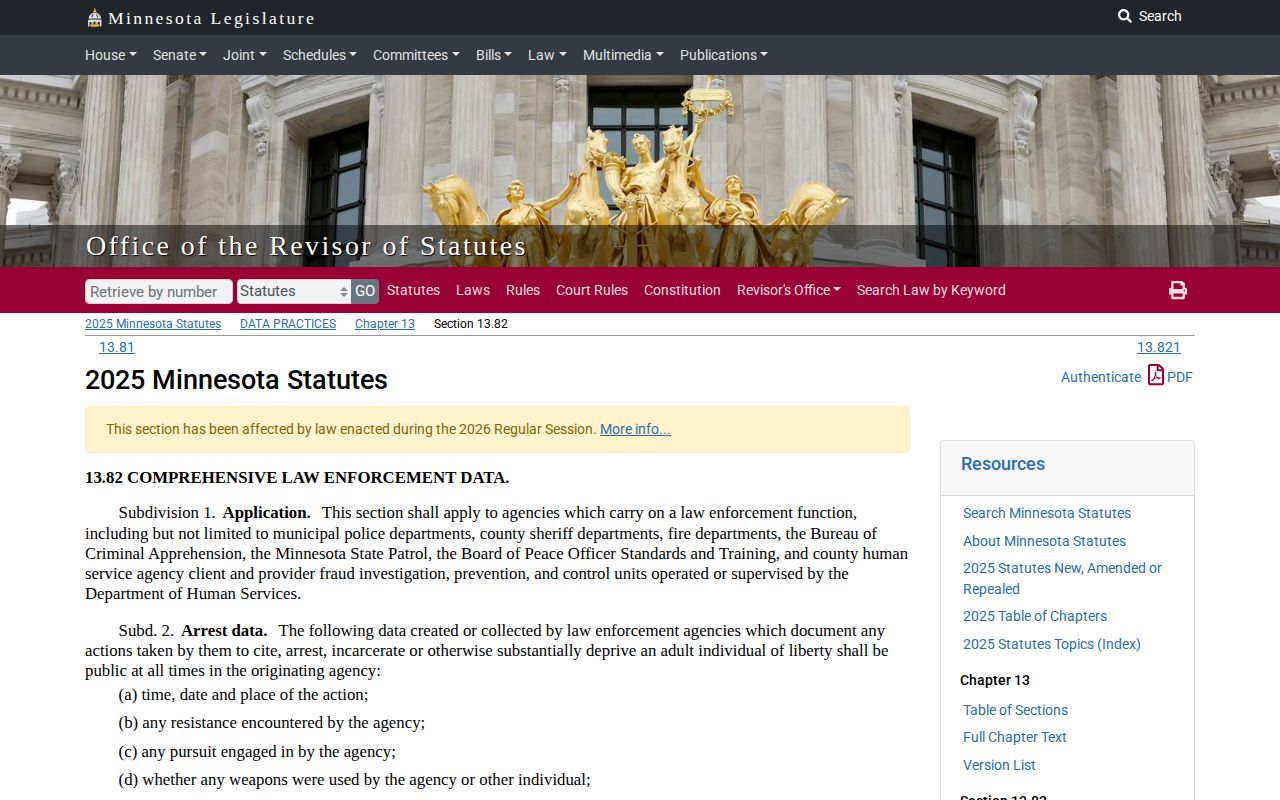
The law supports access to an existing public image, while the records custodian decides whether an active-investigation exception applies.
Where Itasca Released Mugshots Appear
No single official channel is a complete archive of Itasca County released inmate mugshots. Use the source tied to the type of custody and the booking event. The county photo and a Minnesota DOC photograph may both be official, but they represent different correctional records.
| Channel | Has a photo? | How to access it |
|---|---|---|
| Sheriff current roster | Yes, on listed cards | Search current Itasca County Jail entries; it is not a released-photo archive. |
| Official sheriff app | Roster imagery may appear | Use the verified Itasca County Sheriff’s Office (MN) app interface. |
| County records request | Existing booking image | Identify the person and booking, then request the public photograph. |
| MN DOC public viewer | May show a DOC photo | Search a person committed to or supervised by Minnesota DOC. |
| Sheriff arrest or news item | Sometimes | Read the item for its stated event; do not infer a later release. |
| Court document | Occasionally | Review an accessible filed document; MCRO is not a mugshot search. |
| Nonofficial publisher or news outlet | Sometimes | Use only as a lead and confirm the image and case through official records. |
VINELink is a custody notification service, not a durable mugshot archive. Court records explain a case disposition. Neither should replace the booking custodian when the exact Itasca County Jail image is needed.
Note: Match names, dates, and booking details because a similar image or name can point to the wrong person.
Itasca Sheriff Photo Channels
The official Itasca County inmate search displays a photograph on each current roster card, along with “View Charges” and a direct “Notify Me of Status Change” VINE link. That combination helps connect the photograph to a live county custody entry and to future event notice. Once the person drops from the roster, the card is not a dependable way to recover the image.
The county previously sent roster users to the branded Itasca County Sheriff’s Office (MN) app. The newer sheriff website now exposes the core roster on the web. The app remains an official alternate interface to sheriff information, but no recent-release photo gallery or released-inmate module was verified. Do not infer one from features used by other counties.
The Sheriff’s “Recent Arrests” page may also show an arrest-linked photograph. Its title matters. Recent arrests are not recent releases. A photo on that page establishes the publication and booking context shown there, not whether custody ended later.
The Itasca County 24-hour release route explains why current roster and arrest pages cannot be relabeled as a release feed.
Request Itasca County Booking Photos
A records request is the durable official route after a web card is gone. Start with the Itasca County public data-request portal or contact the Records Division at 108 NE 5th Street in Grand Rapids, 218-327-7472, weekdays from 8:00 a.m. to 4:30 p.m. The older sheriff form contains useful request fields, but its return address conflicts with the current county page, so the portal or a telephone check is safer.
Ask for an existing record. The Minnesota Government Data Practices Act does not require the county to make a new collage, gallery, or custom list. Full name, date of birth if known, and approximate booking date help the custodian find the correct image. Include the booking identifier when available.
- Identify the booking with the person’s full name, birth date if known, and approximate event date.
- Ask for the existing Itasca County Jail booking photograph in electronic form.
- Request inspection first if viewing the record could avoid copy charges.
- If access is withheld, ask for the specific legal classification supporting the decision.
- Compare the returned image and booking data with the court case and release record.
Public inspection is free. The county manual lists copy charges for certain paper records and actual cost for other work, but the current amount for a digital image should be confirmed when the request is submitted. No universal response time applies to every public-data request.
A person who is the subject of county data may also challenge its accuracy or completeness under the county data-practices manual. That correction process belongs with the custodian. It is more direct than asking an unrelated publisher to reinterpret an official booking entry, and it creates a record of the disputed field.
Itasca DOC Photos Differ
The Minnesota DOC public viewer may display a state correctional photograph for a person committed to DOC or still under DOC jurisdiction. It is not necessarily the photograph made during an Itasca County arrest. The viewer also is not a county booking archive, and a person who has reached final discharge may no longer appear.
MCF–Togo residents belong to the state system. Search them through DOC, not the Itasca County Jail roster. A Togo participant may leave the institutional phase for a supervised community phase while the DOC sentence remains active. The current status, location or supervision details, sentence information, dates, and photograph should all be read exactly as the viewer labels them.
If the public viewer no longer returns a discharged person, send a focused request to DOC Records Information. Include the name, MNDOC Offender ID if known, date of birth, facility, and the exact photograph or custody fields sought. A DOC image proves only what that state record represents.
Other Mugshot Sources Need Context
Local news, an official sheriff news item, or a public court filing may reproduce a booking photograph. Read the item’s date and stated purpose. A press release can document an arrest or public notice without proving the later disposition. The Itasca County District Court register and MCRO provide case context, but MCRO is not designed as an image locator.
Commercial mugshot publishers and other third-party aggregators can carry stale images, wrong names, or incomplete case details. No commercial source is linked or endorsed. If one appears in ordinary search results, treat it only as a lead. Confirm the booking, photo, disposition, and custody event through the sheriff, court, or Minnesota DOC as appropriate.
Removal vendors should receive the same caution. No Minnesota anti-pay-to-remove law was verified in the research sweep. An introduced bill is not current law, and paying a service cannot change the source government record or guarantee that copies elsewhere will disappear.
Note: An image detached from its booking number and case disposition can create a false account of what happened.
Expungement and Itasca Booking Photos
Minnesota expungement seals public access to covered records. It does not physically destroy every copy or eliminate every form of authorized government access. Minnesota Judicial Branch expungement guidance explains the court process. Sections 609A.015 and 609A.02 govern automatic and petition-based paths, with eligibility tied to the outcome, offense, waiting period, and later case history.
A sealed court case can explain why a once-visible record no longer appears in a public name search. It does not by itself show what the sheriff has done with a booking photograph. The person or authorized requester should ask the relevant custodian how the order applies to the specific image and whether public access has changed.
The official criminal expungement resource shows the state court route.
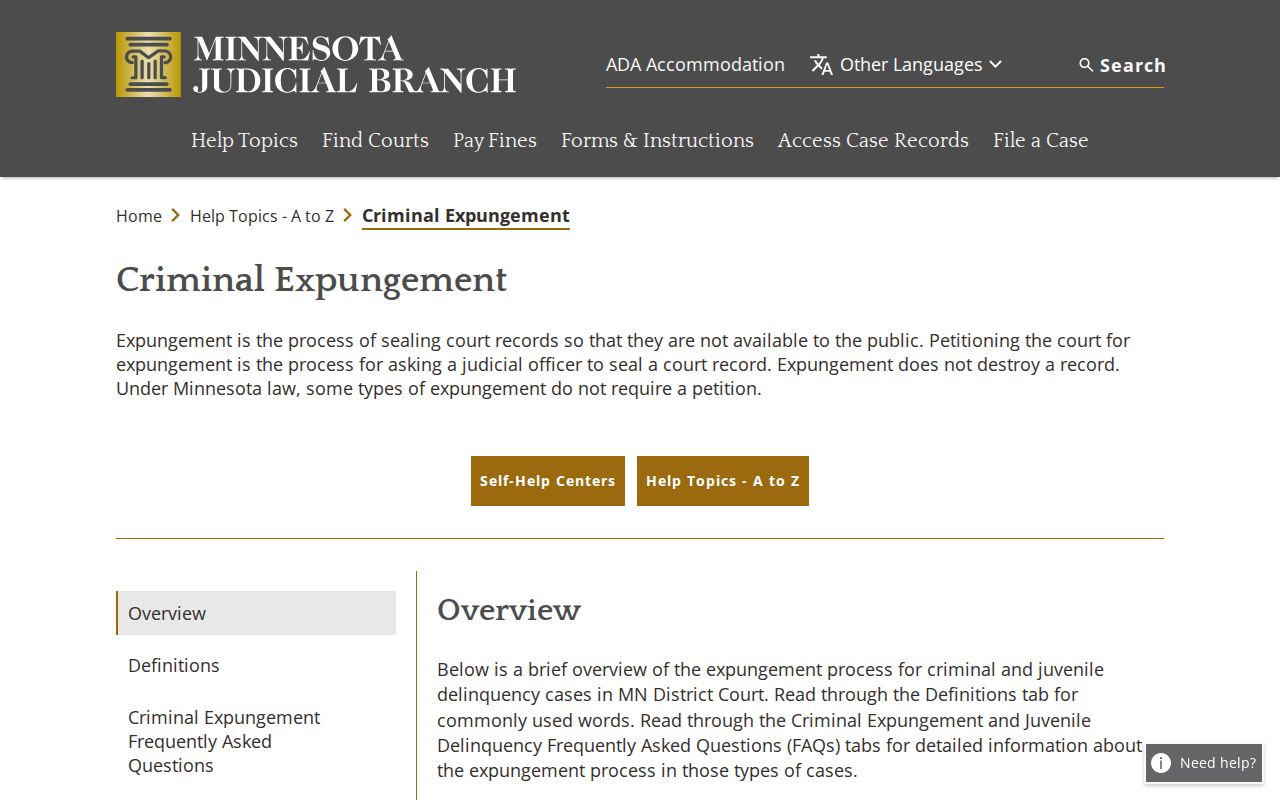
This process addresses public court access, while the sheriff must answer a photo-specific request under the applicable order and data law.
Itasca Mugshot Public Access Rules
Itasca County publishes photographs for people on the current sheriff roster but offers no verified released-person photo archive. This is the county-specific gap. Minnesota law supplies the durable fallback by making the existing booking photograph public unless temporary active-investigation withholding applies. Public status and web display are separate questions.
Section 13.84 and section 13.85 also classify court-services and corrections or detention data. Security, investigative, victim, juvenile, sealed, expunged, medical, and other protected information may limit what accompanies a photo. Request the image and related fields separately so the agency can classify each item.
An Itasca County booking photograph should be presented with its source and event context. It is never proof of guilt, a conviction, release to the community, current supervision, or current custody. For the release event itself, use the Itasca County release record process and the agency that created the custody entry.