
No Itasca County 72-Hour Release Feed
The official Itasca County Sheriff route set has no verified released-person page, three-day archive, or rolling 72-hour view. It provides a current jail roster and a separate recent-arrests screen. The first reflects people currently displayed in custody. The second concerns bookings. Neither reports a complete set of departures over the prior three days.
A three-day release question can still be answered through existing records. Define the date range, check current status, collect time-stamped notices or court events, and ask the Records Division for the release entries it keeps. The result may show community release, transfer, DOC commitment, or another disposition. Itasca County has not published an online retention period or an archive switch, so the absence of an older roster card is not proof that the underlying record was deleted.
Verify Itasca County Three-Day Releases
A wider span is useful when several days have passed since the last status check. It also reduces reliance on memory about when a roster card disappeared. Use exact timestamps at the start and end of the inquiry. If the period crosses a weekend, state the dates rather than writing only “the last 72 hours,” since the custodian may process the request after the moving window has changed.
- Search the current sheriff roster. Note whether the person is still displayed and record the check time.
- Search Minnesota in VINELink or review a registered notification. Read the event type and timestamp exactly.
- Call the jail at 218-326-3477 for present status. Ask for direction to the Records Division when a written event record is needed.
- Review the Minnesota court register for an order, sentence, warrant, or filing that may explain the custody change.
- Request all existing public release events recorded between the exact start and end timestamps, or request one named person’s custody record.
- If the record names another custodian, continue with that agency’s official locator or records office.
The VINE channel can help bridge the gap between live custody and a later record request. Minnesota’s official guidance says participating county-jail data typically update at intervals, not continuously. That description does not establish how often the Itasca sheriff webpage refreshes. It also means a notice should be treated as a time-sensitive report that may need confirmation.
The official Minnesota VINE guidance shows the county-jail notification route used in this workflow.
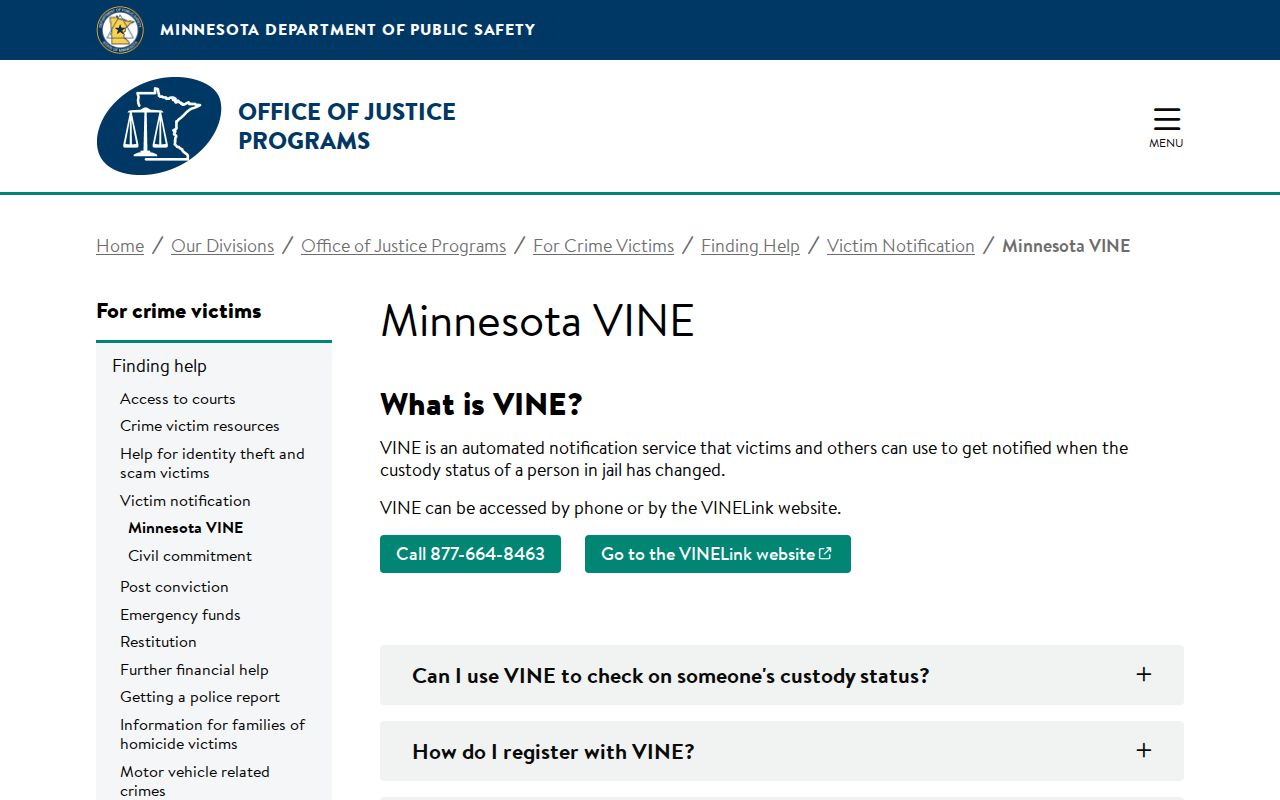
VINE helps track a custody change for a specific person. It is not a bulk 72-hour release list and should not be read as one.
Itasca County 72-Hour Record Fields
Because no public three-day feed exists, the relevant fields come from the release and custody records held by Itasca County. Phrase the request as a search for existing events. The agency is not required to design a new report merely because the requested interval is 72 hours.
| Field | Use within the three-day window |
|---|---|
| Person name | Links each event to the correct subject. |
| Booking number or local ID | Separates multiple custody periods or similar names. |
| Admission date and time | Shows when that county custody period began. |
| Release date and time | Places the event inside or outside the stated range. |
| Release disposition | May identify bond, sentence served, court order, or transfer. |
| Authority or receiving agency | Explains who ordered the event or where custody went next, if public. |
Not every field is guaranteed to exist or be public. Juvenile, sealed, expunged, active-investigation, security, victim, and medical information may be restricted. Ask the custodian to identify the legal classification for anything withheld. A redaction does not make the rest of an otherwise public event unavailable.
Weekend Itasca County Release Timing
A 72-hour span is most helpful after a weekend because it captures more than a single calendar day. Yet there is no official Itasca page that automatically gathers those events. Court action, jail processing, VINE data, and web displays can occur at different times. A release ordered near the end of one day may be completed later, and another hold may prevent the person from leaving even after one case authorizes release.
Use the physical release date and time in the jail record as the key local event. A court entry tells what a judge ordered or what was filed. It does not necessarily give the minute jail staff completed the change. VINE can provide prompt corroboration, but the event label must distinguish release from transfer, escape, death, or another status change. When the sources conflict, call the jail and preserve each source’s wording and timestamp.
For a same-day question within this wider period, use the Itasca County 24-Hour Releases workflow. That route focuses on immediate current-status checks, while this three-day method emphasizes a stable date range and a set of existing events.
Note: A weekend window should use fixed start and end timestamps so it remains clear even if the county reviews the request days later.
Request Itasca County Three-Day Records
Send a narrow request through the Itasca County data-request portal or contact the Records Division at 108 NE 5th Street, Grand Rapids, MN 55744. Its telephone number is 218-327-7472, and its posted hours are Monday through Friday, 8:00 a.m. to 4:30 p.m. The older sheriff PDF still contains useful request fields, but it lists a former street address. The current portal or a telephone confirmation is the safer starting point.
State the beginning and ending date and time. Ask for existing public booking or custody records that show a release within that interval, including the booking identifier, release timestamp, disposition, legal authority, and receiving agency if recorded and public. If the goal is one person, add the full name, date of birth if known, and approximate booking date. Electronic delivery can be requested, but the office decides what it holds and what format can be produced.
Minnesota Statutes section 13.03 governs access to public government data and authorized copy charges.
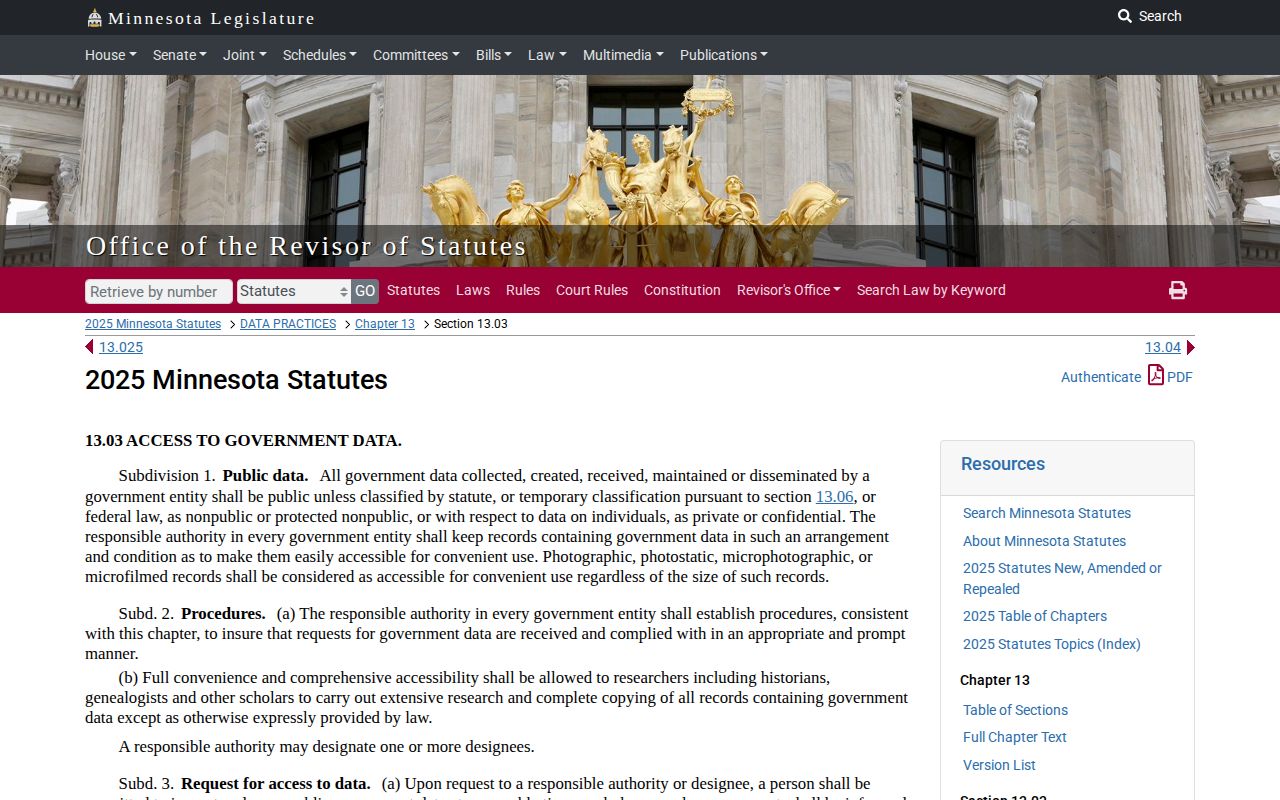
The law supports inspection and a reasonably prompt response, but it does not set one universal turnaround for every release request. It also does not require Itasca County to create a new 72-hour list. If summary data must be prepared, the county manual describes a written-request and estimate process. Ask for a timetable rather than assuming an instant result.
Itasca County Roster Retention Limits
Itasca’s official sitemap and public navigation expose the inmate search and recent-arrests routes but no release or archive route. This local data quirk is central to any three-day inquiry. A person who drops from the current roster has not appeared on a secret public release list. The disappearance is simply a cue to check VINE, the court register, and the recorded custody event.
The current roster card carries a name, booking photograph, charge-detail link, and VINE notification link. No release time, release reason, archive control, post-release display period, or sheriff update cadence was verified. A web card can be brief while the underlying government record remains subject to retention rules. Those are separate questions. Ask the records custodian whether the event exists instead of assuming that the end of a public display erased it.
Recent Arrests must also remain separate. It records an intake event. A person may have been arrested during the three-day window and still be in custody, may later leave, or may be transferred. Only the later custody or release record settles the departure.
Itasca County Release Transfer Checks
A multi-day list can hide an important distinction: leaving Itasca County Jail does not always mean leaving custody. The county facility can release a person to the community, another Minnesota jail, the Minnesota Department of Corrections, federal authorities, or immigration authorities. The disposition and receiving agency determine the next source.
- Community release
- Physical departure from custody, which may still involve court conditions, probation, or another form of supervision.
- Transfer
- Movement from one custodian to another. The person has left the first roster but remains held elsewhere.
- DOC commitment
- The county-jail period ends and Minnesota state custody begins. Search the MN DOC public viewer after processing time.
- Final discharge
- The end of the correctional authority for that sentence, which is different from release from prison into supervision.
MCF–Togo requires a separate state path even though it is located in Itasca County. It is an MN DOC institution, not part of the county jail. A qualifying participant may leave Togo’s institutional phase for supervised community phases without reaching final discharge. Confirm that transition through MN DOC, the supervising office, DOC records, and Minnesota Haven when eligible.
A federal sentenced person belongs in the BOP locator. Federal pretrial custody may require the court docket and USMS records. ICE’s current detainee locator and immigration-record route address immigration custody. No result in one system proves community release from all others, so use the receiving-agency field as the bridge between searches. For a named person whose custody type is uncertain, the Itasca County release-record search lays out the full path.
Note: A receiving-agency field turns a vanished Itasca roster card into a traceable transfer path instead of an unsupported release claim.